XMOS USB Audio 2.0 Reference Design Jitter Measurement
January 9, 2012 - filed under: DAC,Sources
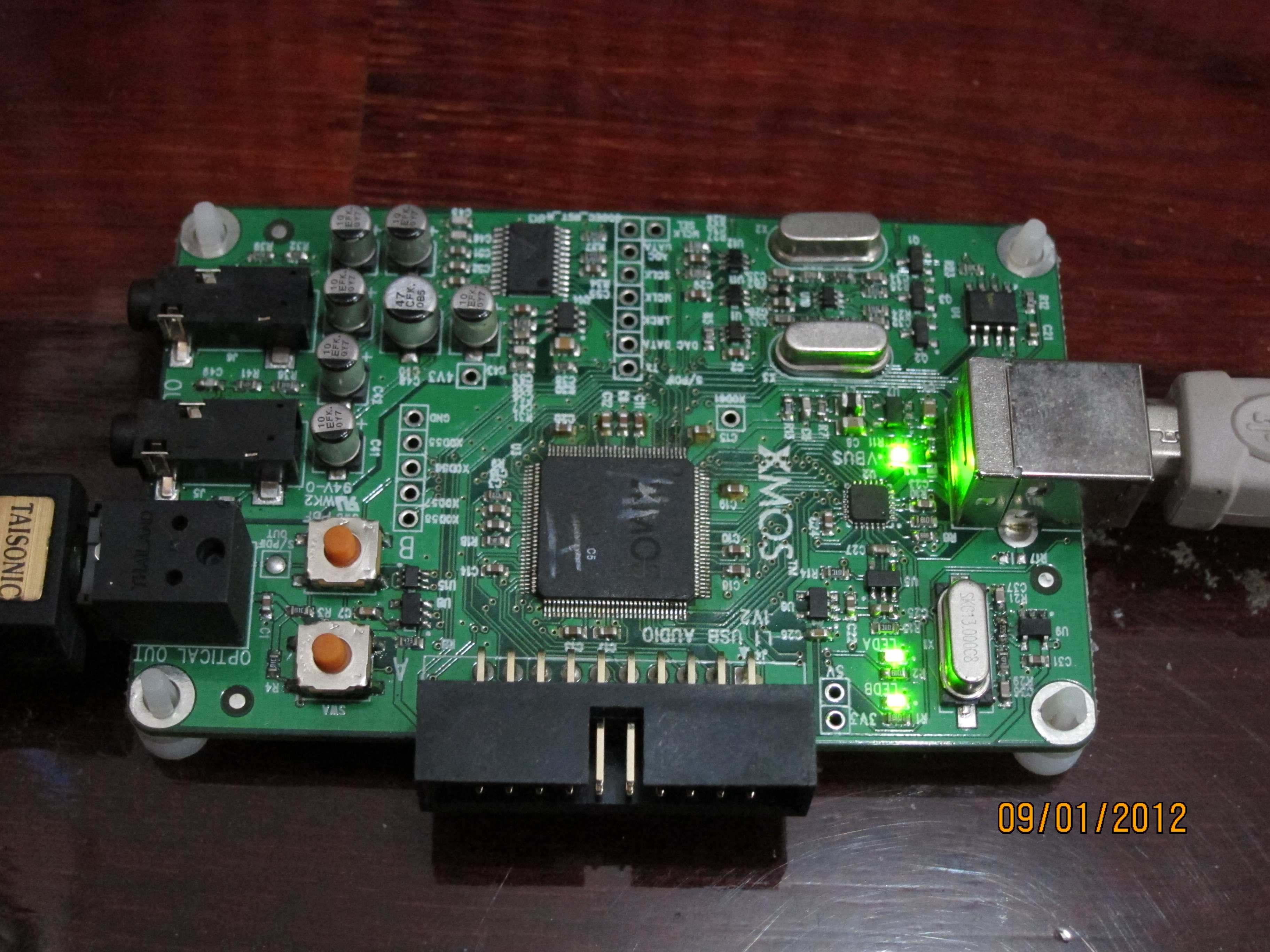
The XMOS demo board sold for $149 in digikey. The firmware need to be loaded before the board can be used. There is a digital out from the USB 2.0 demo board and thus it will be a easy interface from USB to FDA-1 optical input. What you need to do is to get an optical cable to link up output of demo board and input of FDA-1 Toslink. I have tested this mode and the sound is better than using Ti PCM2707 USB receiver with I2S output.
.
On board, there is a I2S connector and thus the clock jitter measurement is taken at the MCLK, BCLK, LRCLK locations. The jitter at MCLK from 48k to 192k Fs is from 10 to 13 pico second respectively which are excellent. In fact the MCLK is taken directly from the onboard crystal oscillator after the buffer logic IC. For jitter at other clock like BCLK (Bit Clock) and LRCLK (Word Clock, Fs), they are as high as 800 pS or above. For any DAC using the MCLK as the clocking reference (like FDA-1), the result should be very good.
Attached is the document of jitter measurement for reference:
Jitter measurement by Lecroy DDA-120
From all the measurement, the lowest jitter mode is to set the output of the USB 2.0 at 24 bit with 48k Fs.
With a more accurate period jitter machine Wavecrest DTS-2070C, the jitter at MCLK is measured at only 4.6ps. See attached document:
Jitter measurement by Wavecrest DTS-2070C
Comments Off
Squeezebox Classic
August 16, 2009 - filed under: Sources
This is the version 3 of Squeezebox (SB3) and I can get it about 1,500 HKD in Mongkok computer center, Hong Kong.
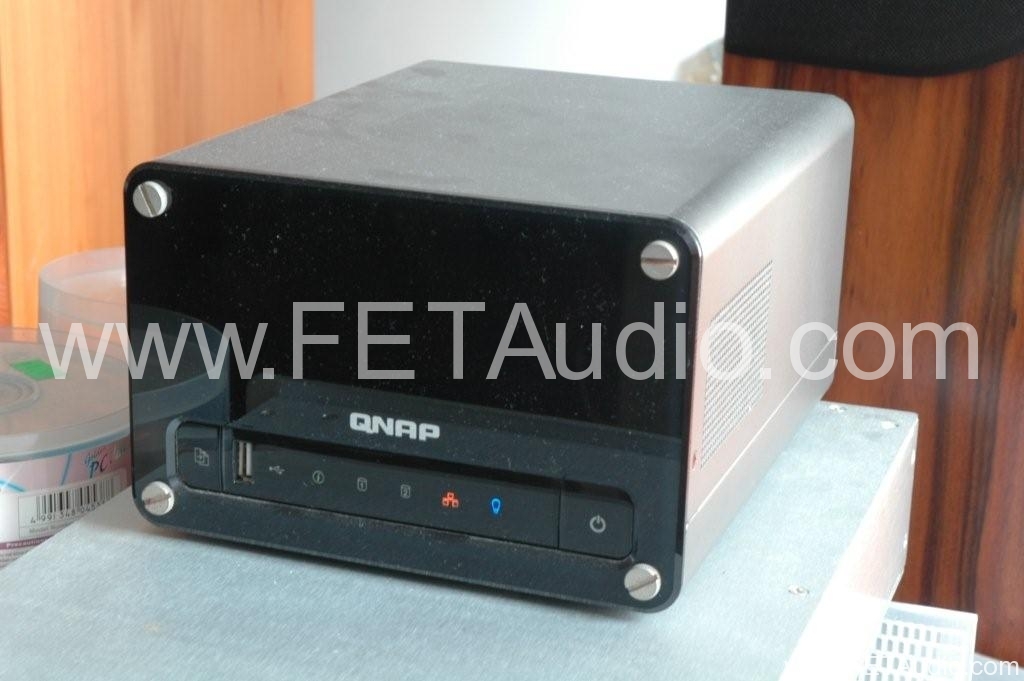
This network player must be used with a computer or a NAS (network attached storage). I use both as I have a old Qnap TS-201 NAS. This is really a pain to install the squeezecenter in the Qnap as there is no more support from Qnap. Finally I get it done with the help of the link here.
http://forums.slimdevices.com/showpost.php?p=302757&postcount=332
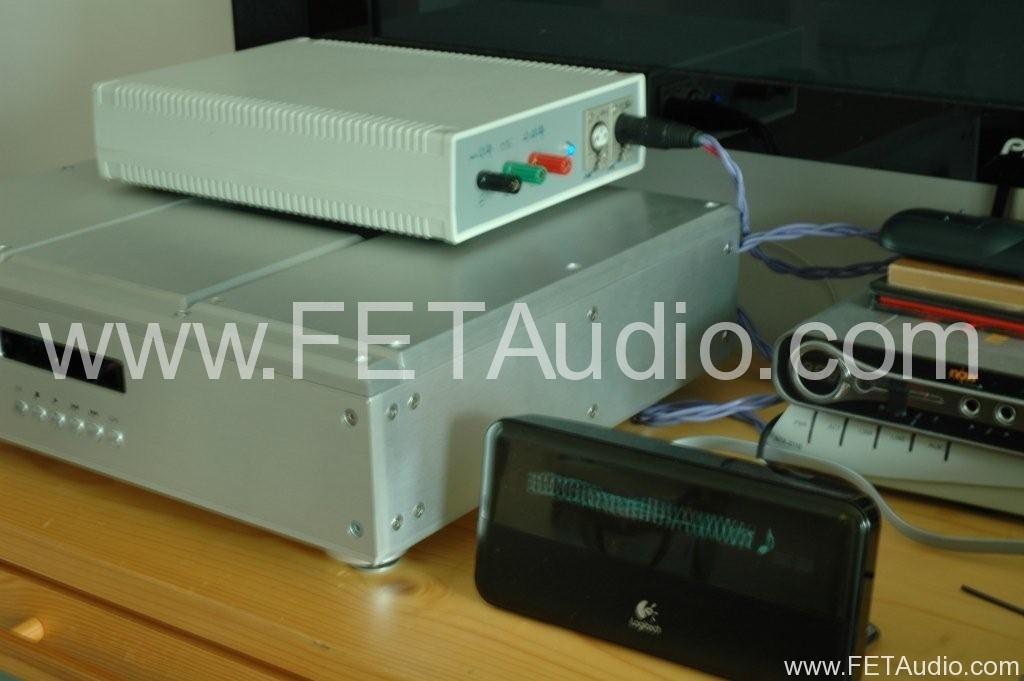
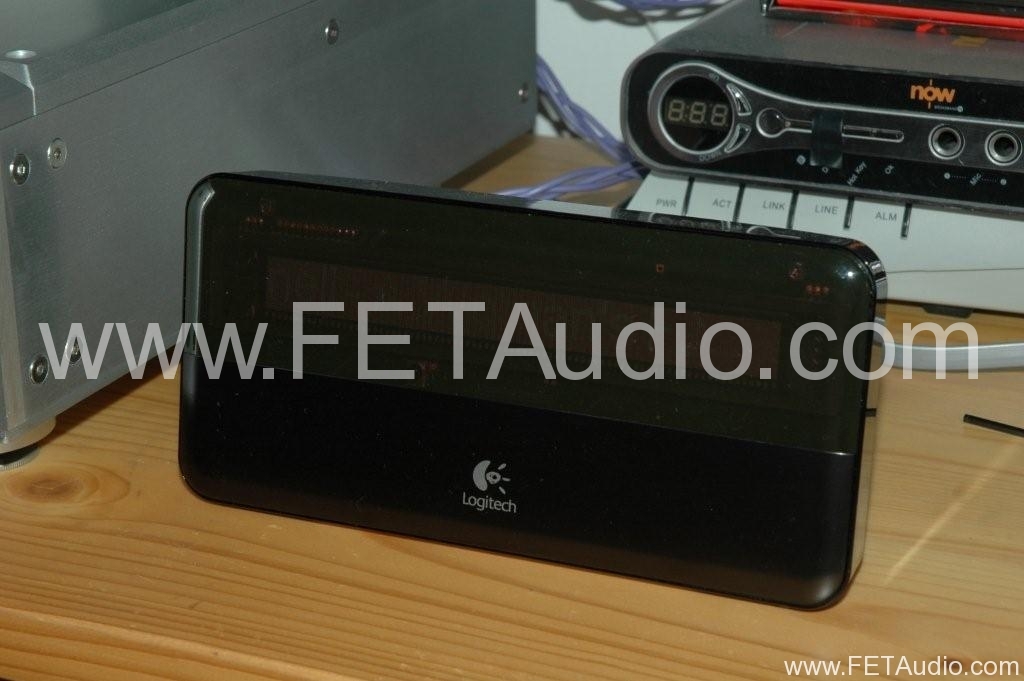
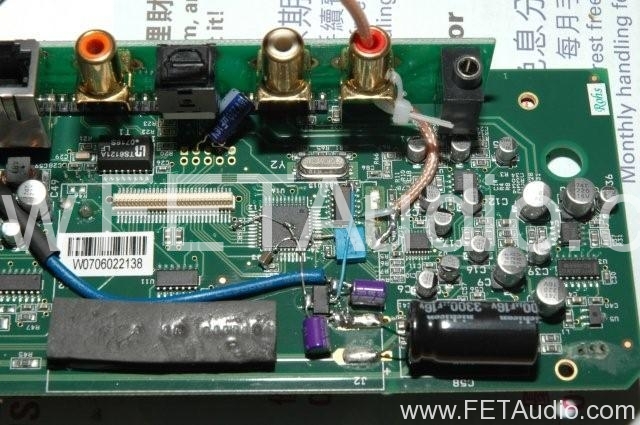
The SB3 has both optical and SPDIF (RCA) out plus a two channel analogy output. I do not use the analogy out put but only the digital input and my D1V3 or D1V33 DAC. I have modified the SB3:
- Outbox 5V 1.5A linear regulator to replace the stock switch mode power adapter.
- Add 3.3V regulator for CPLD and HCU04 ICs which hopefully can improve the jitter of SPDIF signal.
- Sync one of the clock to CPLD (11.2896MHz) from outside DAC – D1V3 via a SMA coaxial cable.
- Finally I settle with a XO to replace outside clock due to flexibility of my DAC to receive different sampling frequency from 32kHz to 96kHz.
Ok, the sound!
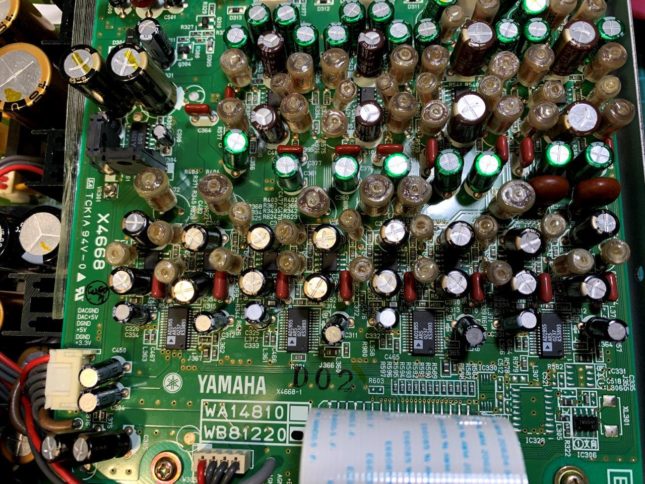
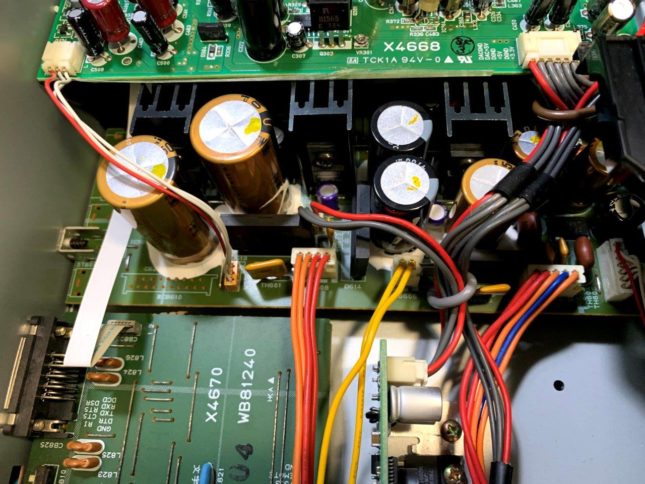
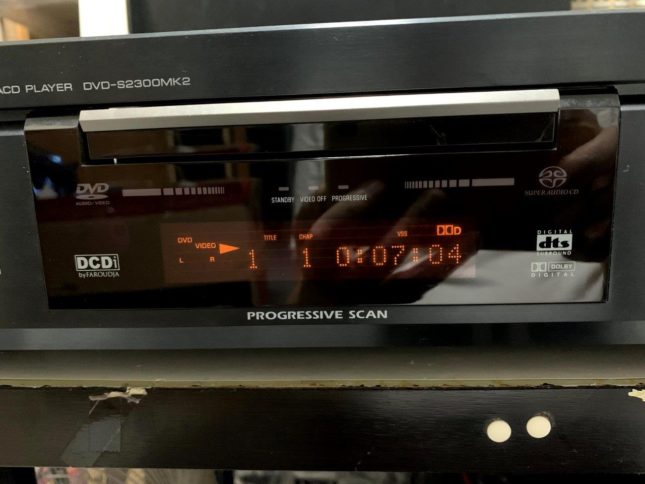
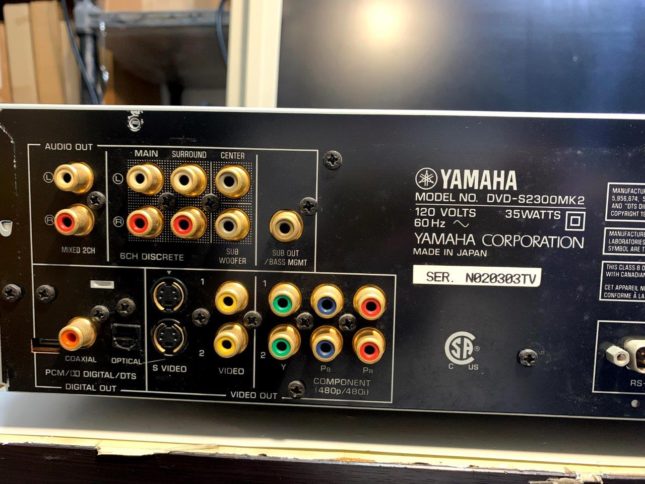
I would say SB3 is very good relative to normal CD/DVD Player (I have Marantz DV7600 and Yamaha DVD S2300MKII) or low cost transport. Compare to CD-PRO2, it lack the lower bass authority. Other than lower frequency, I think the SB3 is very good in mid and high frequencies. This is a real bargain if you use it to replace your CD transport!
Comments Off
Rubidium Atomic Clock FE-5680A
August 12, 2009 - filed under: Sources
If you are lucky, you may be able to get one of this used atomic frequency standard for about US$100 from ebay. This is a programmable clock from 1Hz to 20MHz. With the low phase noise of this clock, it is the best choice to create a super clock standard using FE-5680A. The supply of this clock use 15Vdc and current about 2A. After warm up for 10 minutes, the current will drop to about 0.75A. Thus the continue power consumption is about 12W which is quite a lot and thus the metal body should be attached to a heat sink or metal chassis for cooling.
Currently I am using this Rubidium Frequency Standard at 10Mhz as the reference frequency for other equipment like frequency counter or AP-2522 etc…
There are two documents that I can find from internet which are very useful for using this super low noise clock.
If I have time, I shall put this super clock into a chassis with all the connectors and power supply all in one box… It is something like a reference clock used in a studio to sync all the digital equipment.